

Discover how a cloud POS system for restaurants transforms operations, improves customer experience, and increases profits. Learn benefits, features, comparison, and real case studies.
The restaurant industry is evolving rapidly. Customers expect faster service, seamless payments, online ordering, and personalized experiences. At the same time, restaurant owners must manage inventory, staff, menu updates, and finances efficiently.
This is where a cloud POS system for restaurants becomes a game-changing technology.
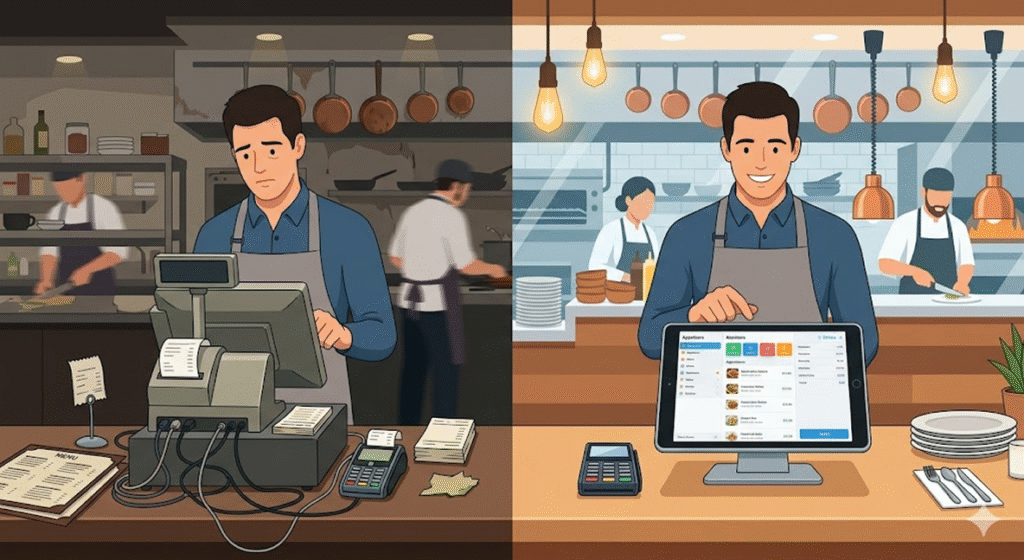
Traditional POS systems relied on bulky hardware and local servers. Modern restaurants are now shifting to cloud-based technology because it offers flexibility, real-time insights, and scalability. In fact, most modern POS platforms store operational data online, allowing restaurant owners to access information anytime from any device.
In this detailed guide, we will explore:
- What a cloud POS system for restaurants is
- How it works
- Key benefits for restaurant owners
- A real case study
- Comparison with traditional POS systems
- Implementation strategies
- FAQs and expert insights
Whether you run a small café or a multi-location restaurant chain, this guide will help you understand why adopting a cloud POS system for restaurants is essential for growth.
What Is a Cloud POS System for Restaurants?
A cloud POS system for restaurants is a modern point-of-sale platform that stores restaurant data online instead of on local servers.
It allows restaurants to process payments, manage orders, track inventory, and analyze sales through internet-connected devices like tablets, smartphones, or computers.
Unlike traditional POS systems that rely on local hardware infrastructure, a cloud system runs through secure remote servers and synchronizes data instantly across devices.
How It Works
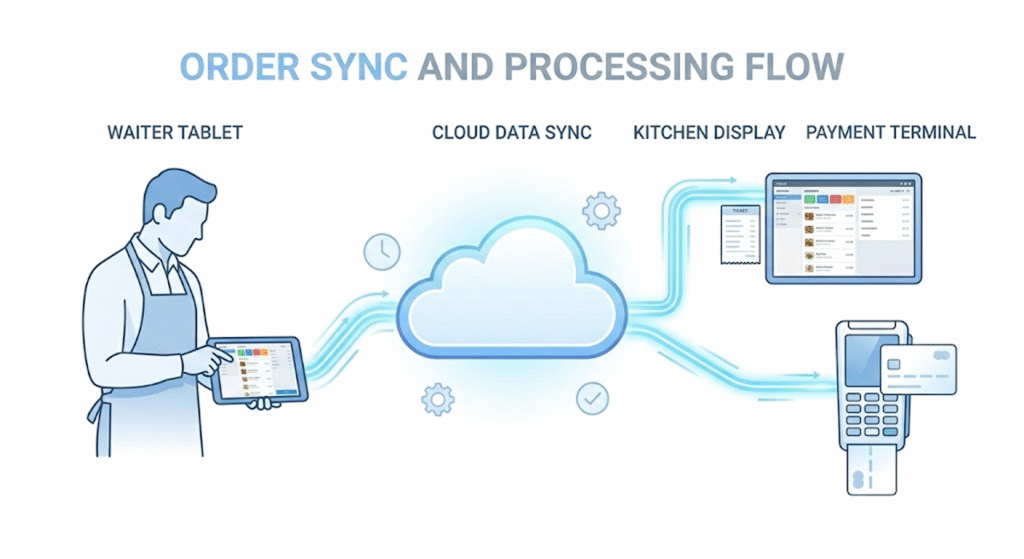
A typical cloud POS system for restaurants works in the following steps:
- Order Entry – Staff enter orders through a tablet or POS terminal.
- Cloud Processing – The order data is sent to cloud servers.
- Kitchen Notification – The kitchen receives the order instantly through a kitchen display system.
- Payment Processing – Customers pay via card, mobile wallet, or online payment.
- Data Sync – Sales, inventory, and reports update in real time.
This real-time connectivity ensures smoother operations and faster service.
Why Restaurants Are Switching to Cloud POS Systems
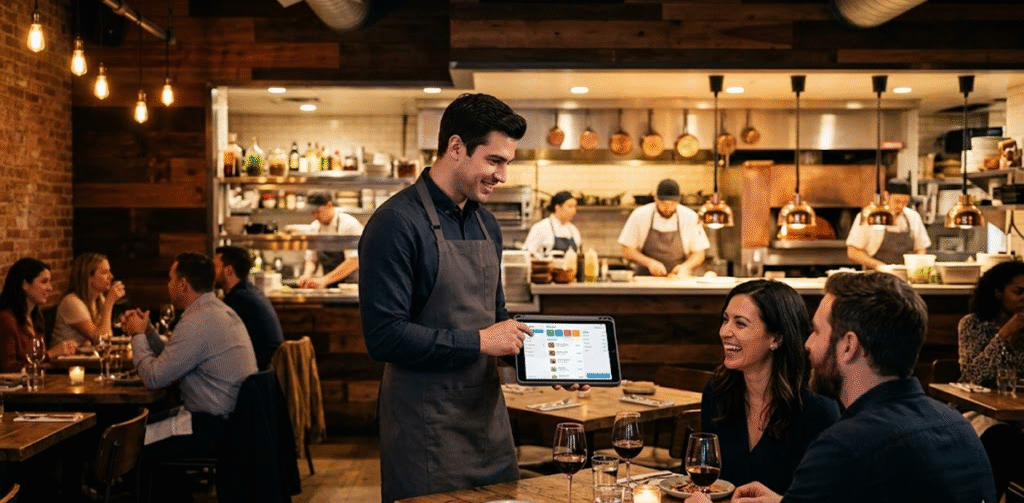
Technology adoption in restaurants is growing rapidly. Restaurants now operate in a competitive and digital-first environment where efficiency and speed are critical.
Here are the main reasons why restaurants prefer a cloud POS system for restaurants:
- Remote access to business data
- Automatic software updates
- Lower infrastructure costs
- Faster order processing
- Real-time reporting and analytics
Cloud POS platforms also reduce the dependency on IT maintenance because software updates occur automatically without manual installations.
Key Features of a Cloud POS System for Restaurants
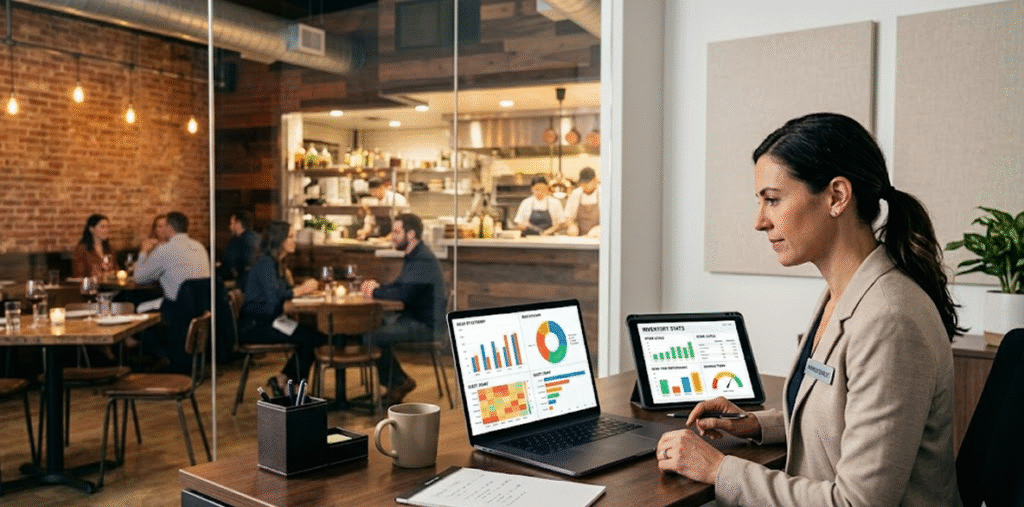
A modern cloud POS system for restaurants offers a wide range of features designed to streamline daily operations.
1. Real-Time Sales Analytics
Restaurant owners can track:
- Daily revenue
- Peak dining hours
- Best-selling menu items
- Staff performance
Real-time data allows faster decision-making and strategic planning.
2. Inventory Management
Inventory tracking is one of the most powerful features.
Benefits include:
- Automatic ingredient tracking
- Low-stock alerts
- Reduced food waste
- Better supplier management
3. Online Ordering Integration
Modern POS systems integrate with:
- Delivery apps
- Restaurant websites
- QR code ordering
- Mobile ordering platforms
This helps restaurants expand their digital presence.
4. Staff Management
Managers can track:
- Staff attendance
- Work hours
- Sales performance
This helps optimize staffing and reduce labor costs.
5. Multi-Location Management
For restaurant chains, a cloud POS system for restaurants enables centralized management of multiple locations.
Managers can monitor all outlets from one dashboard.
Story: How a Small Café Transformed Using Cloud POS
Let’s look at a real-world scenario.
Before Cloud POS
Emma owned a small café with:
- Manual billing
- Paper inventory tracking
- Long customer wait times
Every evening, she spent hours calculating sales and stock manually.
After Implementing a Cloud POS System
Emma adopted a cloud POS system for restaurants and saw dramatic improvements:
- Orders sent directly to kitchen screens
- Instant digital payments
- Automated inventory tracking
- Real-time sales dashboards
Within six months:
- Revenue increased by 28%
- Service time reduced by 40%
- Inventory waste dropped significantly
This example shows how technology can transform restaurant operations.
Case Study: Multi-Location Restaurant Chain
Restaurant Profile
- 5 restaurant locations
- 120 staff members
- 3000 daily customers
Problem
The restaurant chain faced challenges:
- Inconsistent sales reporting
- Difficulty managing multiple outlets
- High IT maintenance costs
Solution
They implemented a cloud POS system for restaurants across all locations.
Results
- Centralized data reporting
- Real-time monitoring of sales
- Automatic menu updates across branches
- Reduced operational costs
Within a year, the chain increased profitability by 35%.
Comparison: Cloud POS vs Traditional POS

| Feature | Cloud POS System for Restaurants | Traditional POS |
| Data Storage | Cloud servers | Local hardware |
| Accessibility | Anywhere via internet | Only on-site |
| Setup Cost | Lower | Higher |
| Software Updates | Automatic | Manual |
| Scalability | Easy | Limited |
| Multi-Location Management | Simple | Complex |
| Maintenance | Minimal | High IT support |
This comparison clearly shows why the cloud POS system for restaurants is becoming the industry standard.
Benefits of a Cloud POS System for Restaurants
1. Remote Access
Restaurant owners can monitor business performance from anywhere through smartphones or laptops.
2. Lower Hardware Costs
Cloud systems eliminate the need for expensive servers and complex hardware infrastructure.
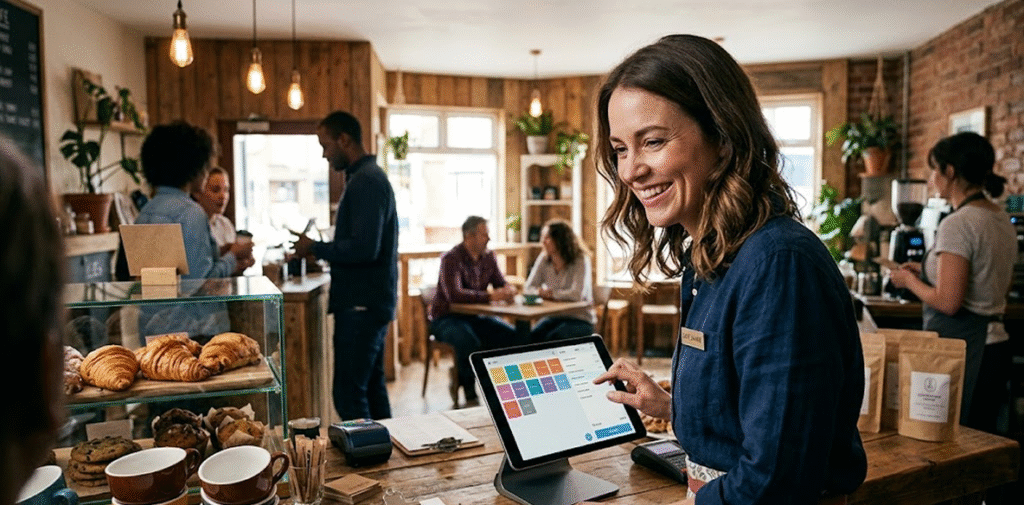
3. Improved Customer Experience
Faster order processing means:
- Shorter wait times
- Better service quality
- Higher customer satisfaction
4. Real-Time Data Synchronization
All transactions update instantly across devices, ensuring accurate reports and analytics.
5. Scalability
Restaurants can easily expand their operations without replacing the entire POS infrastructure.
Challenges of Cloud POS Systems
Despite its benefits, a cloud POS system for restaurants may have some challenges.
Internet Dependency
Most features require internet connectivity, although many systems provide offline functionality.
Subscription Costs
Cloud POS typically operates on a monthly subscription model.
However, these costs are usually lower than maintaining traditional systems.
How to Choose the Best Cloud POS System for Restaurants
Choosing the right POS system requires careful evaluation.
Consider These Factors
- Ease of use
- Integration capabilities
- Security features
- Pricing model
- Customer support
Essential Features Checklist
- Mobile POS compatibility
- Inventory tracking
- Kitchen display integration
- Payment gateway support
- Multi-location support
Selecting the right cloud POS system for restaurants ensures smooth implementation and long-term success.
Implementation Strategy for Restaurants
To successfully implement a cloud POS system for restaurants, follow these steps:
Step 1: Identify Business Needs
Analyze operational challenges and define requirements.
Step 2: Choose the Right Vendor
Research vendors with strong industry reputation.
Step 3: Train Staff
Provide proper training to staff members.
Step 4: Test the System
Run pilot testing before full deployment.
Step 5: Monitor Performance
Continuously analyze performance and optimize workflows.
Future Trends in Restaurant POS Technology
The future of the cloud POS system for restaurants looks promising.
AI-Powered Analytics
Artificial intelligence will help predict customer demand and optimize menus.
Contactless Dining
More restaurants will adopt QR code ordering and contactless payments.
Integrated Customer Loyalty Programs
POS systems will offer deeper customer insights and personalized experiences.
Voice-Based Ordering
Voice assistants may soon integrate with POS systems.
Frequently Asked Questions (FAQs)
1. What is a cloud POS system for restaurants?
A cloud POS system for restaurants is a digital point-of-sale platform that stores restaurant data on cloud servers and allows remote access through internet-connected devices.
2. Is cloud POS secure?
Yes. Most systems use encrypted data storage and secure servers to protect transactions and business data.
3. Can cloud POS work offline?
Many modern POS systems offer offline functionality and sync data once the internet connection is restored.
4. How much does a cloud POS system cost?
Pricing varies depending on features and vendor but usually includes a monthly subscription fee.
5. Is cloud POS suitable for small restaurants?
Yes. Cloud POS systems are scalable and suitable for small cafés, food trucks, and large restaurant chains.
Final Thoughts
The restaurant industry is becoming increasingly digital, and adopting modern technology is no longer optional.
A cloud POS system for restaurants offers a powerful solution that improves operational efficiency, enhances customer experience, and supports long-term growth.
From real-time analytics and inventory management to multi-location control and online ordering integration, cloud POS technology empowers restaurants to operate smarter and faster.
Restaurants that adopt cloud-based POS solutions today will be better prepared for the future of hospitality.