Running a restaurant looks glamorous from the outside — full tables, happy guests, a menu people rave about. From the inside, it’s a different story. The common problems restaurant owners face rarely show up as one big crisis. They show up as a hundred small frictions a day: a double-booked table at 7 PM, a delivery app commission eating a third of an order’s value, a server keying the same booking into three different systems. Individually, these look like annoyances. Added up over a month, they decide whether a restaurant turns a profit or just breaks even.
This guide walks through the operational problems that quietly drain time, money, and guest goodwill from restaurants and cafés in 2026 — and what actually works to fix them, based on how modern restaurant technology has evolved.
Why Restaurant Management Feels Harder Than It Should
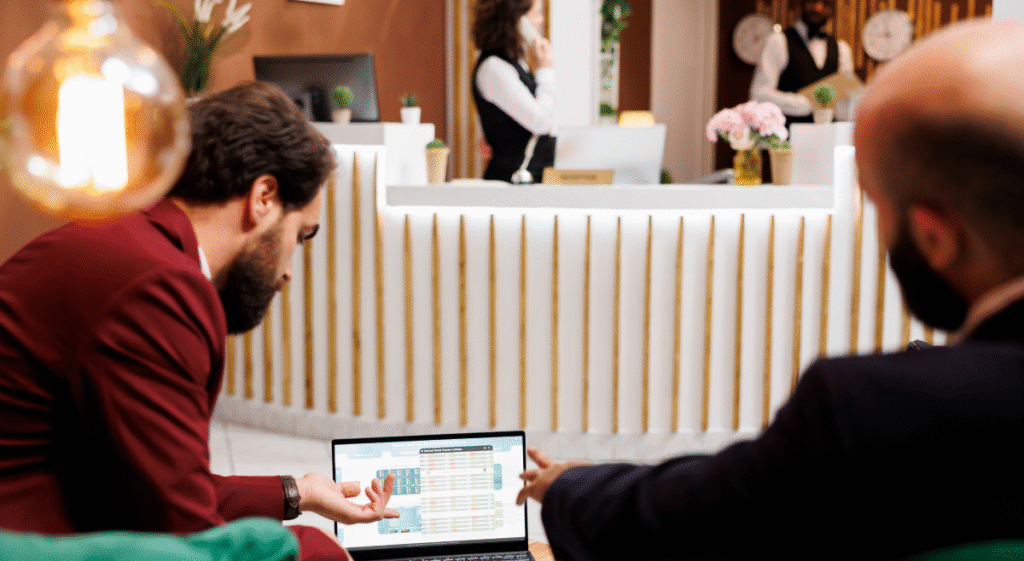
Most restaurants didn’t set out to run on five different tools. It happened gradually. A reservation book became a spreadsheet, then a booking app. A cash drawer became a card machine, then a separate online payment gateway. A specials board became a delivery app menu that never quite matches the dine-in menu. None of these tools were built to talk to each other, so the owner or manager becomes the integration layer — manually.
That’s the root of most common problems restaurant owners face today: not a lack of effort, but a lack of a single system that connects reservations, orders, payments, and insights.
The Most Common Problems Restaurant Owners Face
1. Double Bookings and Manual Reservation Chaos
When reservations live in a notebook, a spreadsheet, or a booking widget that doesn’t sync with the host stand, double bookings are inevitable. A guest calls in while another books online for the same table, and nobody catches the overlap until both parties are standing at the door. The result is lost tables during peak hours, awkward conversations with guests, and a host staff that spends more time firefighting than seating people.
Manual systems also make it hard to plan table turns. Without a live view of who’s arriving, staying, and leaving, restaurants routinely under-use their floor during busy nights — turning away walk-ins for tables that were never actually reserved.
2. Delivery App Commissions Eating Into Margins
Third-party delivery platforms solved a real problem — getting food to guests who won’t walk in — but they solved it at a steep price. Commission rates commonly range from 15% to 30% per order, which can turn a profitable dish into a break-even one once packaging, prep labor, and platform fees are factored in. Owners who rely heavily on these apps often find that their delivery volume is growing while their delivery profit stays flat or shrinks.
The deeper problem is dependency. When a restaurant has no direct ordering channel of its own, it has no way to reduce that commission bleed without losing the orders entirely.
3. Juggling Multiple, Disconnected Tools
A typical independent restaurant in 2026 might run a POS for billing, a separate app for reservations, another for online ordering, a third-party tool for loyalty, and a spreadsheet for inventory. None of these systems share data automatically. Staff re-enter the same guest information, menu items, and prices in multiple places, and every manual entry is a chance for errors — wrong prices, missing modifiers, mismatched stock counts.
This fragmentation also slows down staff training. New hires have to learn four or five separate interfaces instead of one, which extends onboarding and increases the odds of mistakes during a rush.
4. Missing Insights on What’s Actually Selling
Without a unified analytics view, owners are often making decisions on gut feel rather than data. Which dish is quietly losing money once ingredient costs rise? Which time slots are consistently under-booked? Which promotions actually bring repeat guests versus one-time discount hunters? These are answerable questions — but only if sales, reservation, and guest data live in one place instead of scattered across disconnected tools.
Restaurants that lack this visibility tend to react to problems months after they start, whether that’s a menu item quietly eating into margin or a slow Tuesday night that never gets addressed.
5. Staff Training and Order Accuracy Issues
Order accuracy problems compound every other issue on this list. A miscommunicated modifier between the front of house and the kitchen leads to remade dishes, wasted food, and a guest who waited longer than they should have. When kitchen tracking happens on paper tickets or shouted orders rather than a real-time digital system, mistakes are harder to catch before they reach the table.
6. Inconsistent Guest Experience Across Locations
For restaurant groups and multi-location operators, an additional layer of complexity appears: keeping menus, pricing, promotions, and loyalty programs consistent across every outlet. Without centralized management, one location might run an outdated menu while another has already priced in a supplier cost increase — creating a guest experience that varies by branch instead of by design.
7. No Direct Relationship With Repeat Guests
When most orders and bookings flow through third-party apps, restaurants lose visibility into who their repeat guests actually are. A delivery platform knows which guests order weekly; the restaurant often doesn’t, because that data never leaves the app. Without a direct channel for loyalty and promotions, owners end up paying to re-acquire the same guest over and over through platform ads and commissions, instead of building a relationship they own.
The Real Cost of Ignoring These Problems
These issues rarely show up on a single line of the profit and loss statement, which is exactly why they persist. A double-booked table doesn’t get logged as “lost revenue.” A 25% delivery commission doesn’t get flagged as “avoidable cost.” A slow-moving menu item doesn’t announce that it’s dragging down margin. Instead, these problems show up collectively as thinner-than-expected profit at the end of the month, unpredictable staffing needs, and guest reviews that mention long waits or order mix-ups.
Industry data has consistently shown that independent restaurants operate on thin margins, often in the single digits, which means even a small percentage of recovered revenue — from fewer no-shows, lower commission dependency, or better table utilization — has an outsized effect on the bottom line.
How Restaurant Technology Solves These Problems
The fix isn’t more tools; it’s fewer, better-connected ones. A unified restaurant management platform replaces the patchwork of disconnected apps with one system where reservations, in-house orders, delivery orders, payments, and analytics all feed into the same dashboard. That means a table booked online is instantly visible to the host stand, a kitchen ticket reflects the exact order a guest placed, and a manager can see which dishes are performing without exporting data from five different places.
Consider a mid-sized restaurant handling 40 covers a night across dine-in and delivery. If a unified system recovers even two previously double-booked tables per week and shifts a quarter of delivery volume to a direct, commission-free channel, the combined effect on monthly revenue is rarely marginal — it’s often the difference between a break-even month and a genuinely profitable one. That’s the practical case for consolidation: not a nice-to-have dashboard, but a direct line to recovered revenue.
This is the gap Swizzle was built to close.
Introducing Swizzle: One Platform for Every Restaurant Problem
Swizzle is a restaurant management platform designed around a simple idea: running a restaurant shouldn’t require ten different logins. It brings together the tools restaurants actually use day to day, so orders, reservations, and payments move through one connected system instead of several disconnected ones.
Smart Reservations
Swizzle’s reservation system syncs bookings in real time, so the host stand always reflects the latest table status. That removes the double-booking risk that comes from managing reservations across a phone line, a booking widget, and a paper diary at the same time.
Real-Time Kitchen Tracking
Orders flow directly from the point of sale or table-side ordering into the kitchen display, cutting down on the miscommunication that leads to remade dishes and delayed service.
Integrated Payments
Payments are built into the same platform as orders and reservations, so guest checks, tips, and reconciliation don’t require a separate system or manual matching at the end of the night.
Online and Table Ordering
Guests can order from their table or place an online order through a branded channel, reducing reliance on third-party delivery apps and the commissions that come with them.
Menu Management
Menu updates — a price change, a seasonal item, an 86’d dish — apply across every ordering channel at once, so dine-in, online, and table ordering always show the same menu.
Analytics Dashboard
Sales, reservation patterns, and item-level performance are visible in one dashboard, giving owners the “what’s actually selling” visibility that spreadsheets and disconnected POS reports can’t provide.
Loyalty and Promotions
Built-in loyalty and promotion tools let restaurants reward repeat guests directly, without funneling that relationship through a third-party app that owns the guest data.
Swizzle vs. Other Restaurant Tools
| Feature | Swizzle | Other Tools |
| Reservations | ✅ Built-in, real-time | Often a separate app |
| In-Table Ordering | ✅ Native | Frequently unsupported |
| Integrated Payments | ✅ One system | Usually a bolt-on |
| Analytics & Insights | ✅ Unified dashboard | Scattered across tools |
| Loyalty & CRM | ✅ Included | Third-party add-on |
| Multi-Location Ready | ✅ Centralized control | Limited or manual |
The pattern across most “other tools” is the same: each one solves a single problem well but leaves the connecting work — syncing data, reconciling reports, keeping menus consistent — to the restaurant owner. Swizzle’s approach is to remove that connecting work entirely by handling reservations, ordering, payments, and insights inside one platform.
How to Choose the Right Restaurant Management Software
Not every restaurant needs every feature on day one, but a few questions help narrow the decision:
- Does it handle reservations and in-house ordering in the same system, or will you still need a second tool?
- Can guests order and pay without routing through a third-party app that charges commission?
- Will your team actually use it, or does it require training on a complicated new interface?
- Can you see sales and reservation data in one dashboard, or will you still be exporting spreadsheets?
- Does it scale to a second or third location without duplicating setup work?
Restaurants that answer these questions honestly tend to land on platforms that consolidate functions rather than add another disconnected app to the stack.
Frequently Asked Questions
What is the most common problem restaurant owners face?
Reservation and booking management is consistently cited as one of the most persistent issues, since manual systems lead to double bookings, missed tables, and inefficient floor planning during peak hours.
How much do delivery apps typically charge in commission?
Commission rates on third-party delivery platforms commonly range from 15% to 30% per order, depending on the platform and service tier, which can significantly reduce the profit margin on delivery orders.
Can restaurant management software replace multiple separate tools?
Yes. A unified platform like Swizzle combines reservations, ordering, payments, kitchen tracking, menu management, and analytics into one system, reducing the need for several disconnected apps.
Is restaurant management software worth it for small, independent restaurants?
For most independent restaurants, yes — the time saved on manual reconciliation and the revenue recovered from fewer double bookings and lower commission dependency typically outweighs the cost of the software.
How does Swizzle help reduce delivery app commissions?
Swizzle enables direct online and table ordering through the restaurant’s own branded channel, giving guests a way to order without going through a third-party app and its associated commission.
Key Takeaways
The common problems restaurant owners face — double bookings, delivery commissions, tool sprawl, and missing data — aren’t separate issues to solve one at a time. They’re symptoms of running a restaurant on disconnected systems. Consolidating reservations, ordering, payments, and analytics into one platform is what turns those daily frictions into manageable, visible, and ultimately fixable parts of the business.