
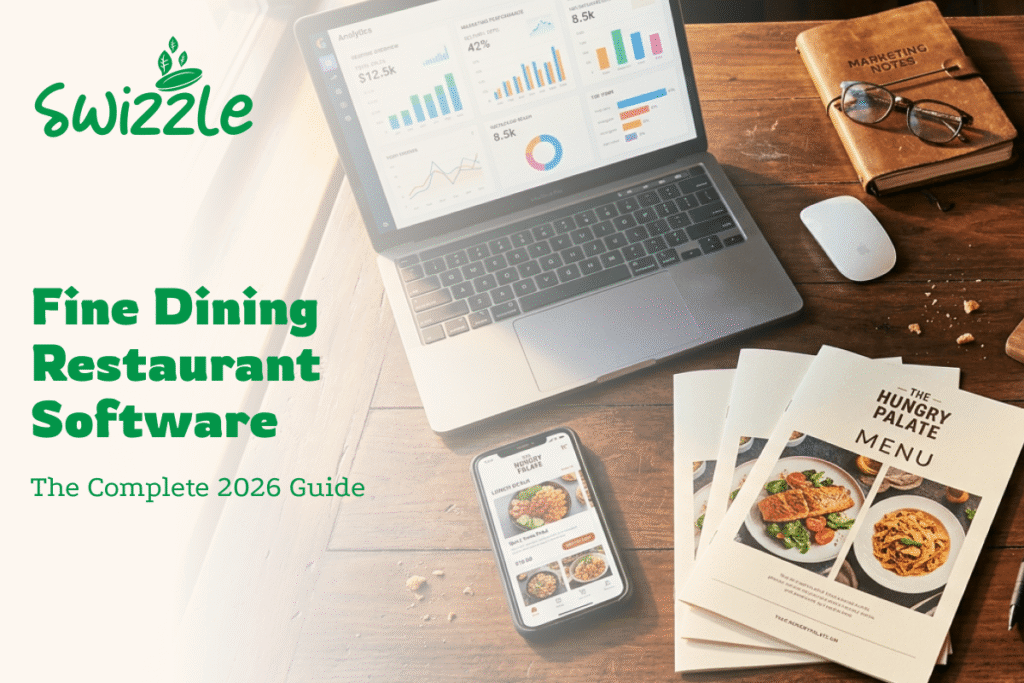
A fully booked Saturday night should feel like a win. Instead, for too many fine dining operators, it feels like triage — a double-booked four-top, a server re-keying an order the kitchen already started, a guest waiting on a card machine that’s timing out at the table. The right fine dining restaurant software eliminates that chaos by connecting reservations, ordering, payments, and guest data into one system, instead of forcing your team to bridge the gaps between five disconnected tools. This guide breaks down what fine dining software actually needs to do, which features matter most, and how to evaluate your options without getting distracted by flashy add-ons you’ll never use.
What Is Fine Dining Restaurant Software, Exactly?
Fine dining restaurant software is a category of restaurant management platform built specifically for full-service, reservation-driven operations — not quick-service counters or cafés ringing up walk-in orders. It typically combines reservation and table management, point-of-sale and payment processing, kitchen display and order routing, menu management, and reporting into a single connected system.
The distinction matters. A café needs speed at the counter. A fine dining restaurant needs precision across a multi-course service, accurate table timing, and a payment experience that doesn’t interrupt the meal. Software built for one rarely serves the other well, which is why so many upscale restaurants end up patching together tools that were never designed to talk to each other.
Why Fine Dining Operations Need Different Software Than QSRs or Cafés
Fine dining operators are often sold the same restaurant technology built for high-volume, quick-turnover concepts, then left to figure out why it doesn’t quite fit. The mismatch isn’t cosmetic — it shows up in how reservations are handled, how orders move between front- and back-of-house, and how much of the check actually stays with the restaurant after fees. Three factors set fine dining apart from most other segments.
The Guest Experience Stakes Are Higher
At a fast-casual spot, a slow order is an inconvenience. At a fine dining restaurant, a mistimed course, a lost reservation, or a clunky checkout can undo an otherwise excellent meal. Guests at this price point expect the operational side of dining to be invisible. Software that creates friction — a host stand relying on a paper book, a server manually re-entering a modified order — works against the experience you’re charging a premium for.
Table Turns Are Slower, So Every Reservation Counts
Fine dining tables turn far less frequently than casual dining ones — often once or twice a night compared to three or four turns elsewhere. That means a single double-booking or a no-show has an outsized impact on revenue for the evening. Reservation accuracy isn’t a nice-to-have here; it’s directly tied to how much the restaurant makes that night.
Margins Are Tighter Than Guests Assume
Restaurant margins across the industry commonly run in the mid-single digits, and fine dining’s higher food, labor, and rent costs mean there’s little room for revenue leakage from commission fees, comps caused by order errors, or missed insight into what’s actually selling. Software that reduces even a few percentage points of operational waste has a direct line to profitability.
Core Features to Look For in Fine Dining Restaurant Software
Not every restaurant management platform is built with fine dining’s specific pressures in mind. Here’s what to prioritize.
Smart Reservation & Table Management
Manual reservation books and disconnected online booking widgets are a leading cause of double bookings and lost tables. Smart reservation tools should manage table assignments in real time, account for party size and course pacing, and sync automatically across phone, walk-in, and online bookings so your host stand never has to reconcile two separate lists.
Real-Time Kitchen Tracking
In a multi-course service, timing is everything. Real-time kitchen tracking gives both front- and back-of-house visibility into what’s fired, what’s plating, and what’s running behind — so servers aren’t guessing and expo isn’t shouting across the pass to find out where course three is.
Integrated Payments (Without the Commission Bite)
Many restaurants unknowingly give up significant revenue to third-party delivery apps and disconnected payment processors that layer on commissions and fees. Integrated payments processed directly through your restaurant software keep more of every check in the restaurant’s pocket and give guests a faster, less interruptive checkout — table-side or otherwise.
Online and In-Table Ordering
Even fine dining guests increasingly expect the option to view menus digitally, place bar or pre-order requests online, or handle in-table ordering without waiting to flag down a server. This isn’t about replacing service — it’s about giving your team fewer manual steps to manage.
Menu Management Built for Frequent Changes
Seasonal menus, 86’d items, and nightly specials are constants in fine dining. Software that lets you update the menu once — with changes reflecting instantly across POS, kitchen display, and any guest-facing ordering — prevents the classic problem of a guest ordering a dish the kitchen ran out of an hour ago.
Analytics That Go Beyond Covers Per Night
An analytics dashboard should tell you more than how many guests walked in. Look for insight into what’s selling and when, which menu items carry the best margin, peak reservation windows, and staffing patterns — the kind of data that turns gut-feel decisions into informed ones.
Loyalty and Guest Relationship Tools
Fine dining runs on repeat relationships. Software with built-in loyalty and CRM features lets your team recognize a regular’s preferences, track special occasions, and run targeted promotions — turning first-time guests into recurring reservations without relying on a maître d’s memory alone.
The Hidden Cost of Manual Systems and Disconnected Tools
Most fine dining operators don’t choose chaos on purpose — it accumulates. A reservation book here, a separate POS there, a third-party delivery app for off-premise orders, a spreadsheet for tracking regulars. Each tool solves one problem, but none of them talk to each other.
The result is a set of costs that rarely show up on a single line item but add up fast:
- Double bookings and lost tables from manual reservation management
- Heavy commissions eaten by third-party delivery and booking apps
- Slower service as staff juggle multiple disconnected tools mid-shift
- Missed insight into what’s actually selling and when, because data lives in four different systems that don’t reconcile
A connected restaurant management platform doesn’t just save time — it closes these specific revenue leaks.
How to Evaluate Fine Dining Restaurant Software: A Practical Framework
Before comparing vendors, get clear on what you’re actually solving for. A useful evaluation framework covers:
- Does it unify reservations, ordering, and payments in one system, or will your team still be reconciling data across tools?
- Can staff learn it quickly without a lengthy retraining period that disrupts service?
- Does it support multi-location operations, if that’s on your roadmap?
- Is pricing transparent, with no hidden commission structures on orders or payments?
- What does onboarding and support actually look like during your first few weeks live?
Any platform worth considering should be able to answer all five clearly, without vague marketing language standing in for specifics.
Fine Dining Restaurant Software vs. General POS Systems
A generic POS system built for high-volume, low-complexity service can ring up a sale — but it typically wasn’t designed around reservation-driven, multi-course dining. The table below highlights where the categories tend to diverge.
| Feature | Fine Dining Software | General/Legacy POS |
| Reservations | Built-in, real-time | Often absent or bolted on |
| In-table ordering | Native | Rare |
| Integrated payments | Yes, commission-light | Often layered with third-party fees |
| Analytics & insights | Menu- and guest-level detail | Basic sales totals |
| Loyalty & CRM | Built-in | Usually a separate add-on |
| Multi-location support | Designed for scale | Inconsistent |
This isn’t to say every general POS is inadequate — some restaurants genuinely don’t need reservation or CRM depth. But for a fine dining operation, the gap between these two categories tends to show up exactly where it hurts most: guest experience and margin.
Why Restaurants Are Choosing Swizzle
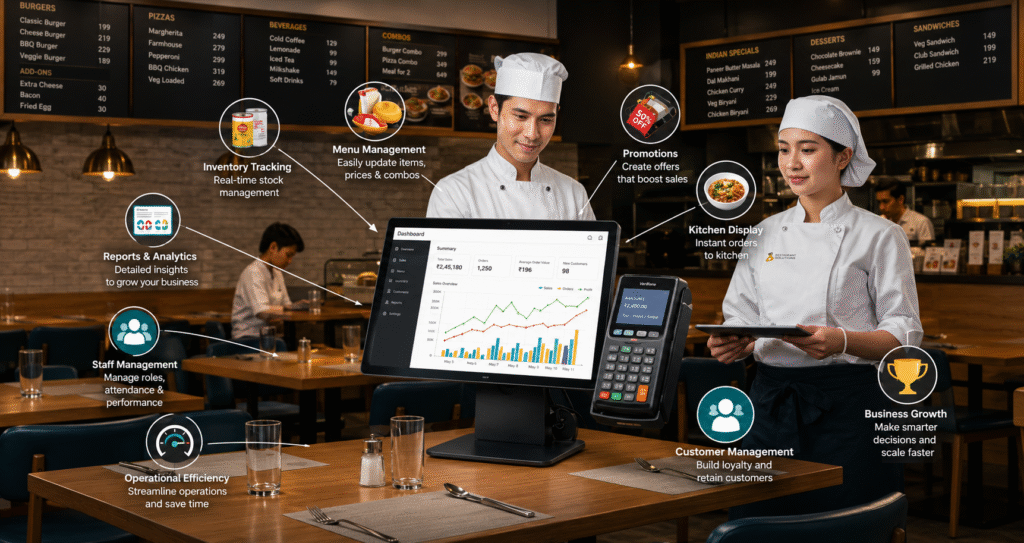
Swizzle was built around a simple premise: running a restaurant shouldn’t require stitching together five different tools that were never designed to work as one. It brings smart reservations, real-time kitchen tracking, integrated payments, online and in-table ordering, menu management, an analytics dashboard, and loyalty and promotions into a single platform.
For fine dining operators specifically, that means fewer double bookings, no heavy third-party commissions eating into check averages, and a clear, real-time picture of what’s selling — all without asking staff to learn and reconcile multiple disconnected systems mid-shift. Where a typical setup asks a host to manage bookings in one app, a server to fire orders in a separate POS, and a manager to pull sales data from a third tool entirely, Swizzle keeps all three functions inside one login and one dataset. Swizzle is also built to be multi-location ready, so restaurant groups aren’t forced onto a patchwork of location-specific tools as they grow, and every location feeds the same analytics dashboard instead of a separate, disconnected report.
Getting Started: Implementation Without Disrupting Service
Switching restaurant software mid-season understandably makes operators nervous — the fear of a broken reservation sync or a kitchen display going dark on a Friday night is real, and it’s the top reason operators delay a switch they know they need to make. A structured rollout is what separates a smooth transition from a service-night disaster, and it doesn’t have to happen all at once:
- Audit your current stack first — list every tool currently handling reservations, orders, payments, and reporting, so nothing gets missed in the transition.
- Migrate menu and guest data before go-live, not during service.
- Run a soft launch during a slower shift to let staff get comfortable before a full Friday or Saturday night.
- Train front- and back-of-house together, since kitchen tracking and table-side ordering depend on both sides working from the same system.
- Review analytics weekly for the first month to catch any gaps early, rather than waiting for a quarterly review.
Frequently Asked Questions
What is the best software for a fine dining restaurant?
The best fine dining restaurant software depends on your operation’s size and needs, but look for platforms that unify reservations, in-table ordering, integrated payments, and analytics in one system rather than requiring separate tools for each function.
How much does fine dining restaurant software cost?
Pricing varies by provider and typically depends on the number of locations, staff seats, and whether payment processing is bundled in. Ask specifically about commission structures on orders, since some platforms layer additional fees beyond a flat subscription.
Is a reservation system necessary for fine dining restaurants?
Yes — because fine dining tables turn far less often than casual dining, a single lost reservation or double booking has an outsized impact on nightly revenue, making accurate table management a priority rather than a convenience.
Can fine dining restaurant software integrate with existing payment processors?
Many platforms, including Swizzle, offer integrated payment processing directly within the system, reducing the need for a separate processor and the added fees that often come with one.
Do small, independent fine dining restaurants need a full restaurant management platform, or just a POS?
Even single-location fine dining restaurants benefit from reservation and table management alongside POS, since the two are closely linked — a smart reservation system directly reduces revenue loss from double bookings and no-shows regardless of restaurant size.
Conclusion: Choosing Software That Matches How Fine Dining Actually Runs
Fine dining restaurant software isn’t about adding technology for its own sake — it’s about removing the friction that manual reservation books, commission-heavy delivery apps, and disconnected tools create every single service. The restaurants getting this right are the ones treating their software stack the same way they treat their menu: intentional, tested, and built around the actual guest experience they’re trying to deliver.
If double bookings, commission fees, and fragmented insight into what’s selling sound familiar, it’s worth seeing what a single connected platform can do for your service. [See how Swizzle brings reservations, ordering, and payments together] and get a walkthrough built around your restaurant’s specific setup.