Restaurant billing software in Tricity has to do more than print a GST bill. On a busy Saturday in Sector 17, Mohali’s Phase 7 or Panchkula’s Sector 5, the trouble starts well before the bill: an order scribbled on a KOT gets re-keyed wrongly, a table promised over the phone is already occupied, and the cash and UPI totals refuse to match at closing.
This guide is for restaurant owners, café operators and hospitality managers in Chandigarh, Mohali, Panchkula and nearby Zirakpur who are choosing, or replacing, a billing system. It explains what good software should handle, how GST shapes your setup, what delivery apps really cost you, and where Swizzle fits.
Key Takeaways
- Standalone restaurants bill 5% GST without input tax credit; restaurants in specified premises bill 18% with credit. Your software should apply the right rate without staff thinking about it.
- Billing alone won’t fix double bookings, slow kitchens or commission-heavy delivery apps. A connected platform will.
- Check six things before buying: GST accuracy, kitchen sync, payments, reports, multi-outlet control and local support.
What Is Restaurant Billing Software?
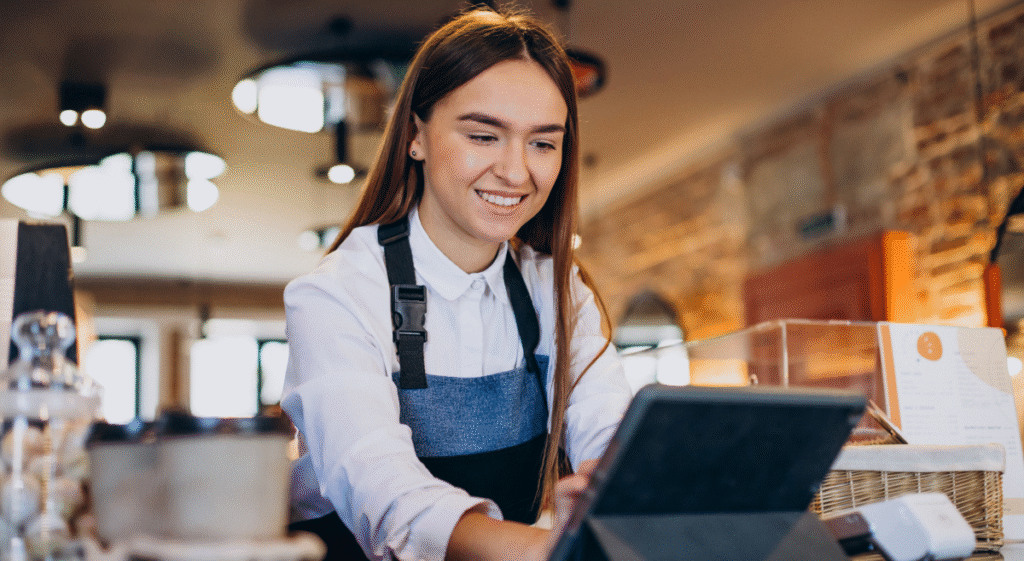
Restaurant billing software turns every order, whether dine-in, takeaway or delivery, into an itemised, tax-correct bill, records how it was paid, and feeds the day’s sales into reports. Better systems also send orders to the kitchen, split bills at the table and close the day with totals that reconcile.
The catch is that “billing” covers a wide range. A basic counter tool prints bills. A restaurant management platform also handles reservations, table ordering, kitchen flow and customer data. Which one you need depends on how much of your day currently runs on phone calls, notebooks and memory.
Why Tricity Restaurants Outgrow Basic Billing Tools
Competition is getting sharper. When Popeyes opened at Elante Mall, it became the brand’s fifth restaurant across Chandigarh, Mohali and Panchkula, and the company described the Tricity as a priority growth market in North India. Nationally, a joint NRAI and Redseer report puts Indian foodservice at roughly US90billioninFY26,headingforUS150 billion by FY31, with the organised segment already holding 45-50% of the market.
Chains arrive with polished systems. Independent owners need the same discipline without the same headcount.
Three administrations, one dining crowd
Chandigarh is a Union Territory, Mohali sits in Punjab and Panchkula in Haryana. Guests cross sector and state lines for dinner without noticing. Your paperwork doesn’t get that luxury.
Liquor sits outside GST and falls under each administration’s excise rules, so a bar-and-restaurant needs alcohol sales tracked apart from food. An owner running outlets in two of the three places needs one view of both, not two spreadsheets stitched together on Sunday night.
Where manual billing leaks money
Take an illustrative café doing 120 bills a day. If 2% carry an error averaging ₹150, that is about ₹360 a day, or roughly ₹10,800 a month, lost or written off. This is a worked example, not survey data, but most owners recognise the pattern.
Errors are only half of it. A double-booked table costs a seated party’s goodwill. A forgotten discount approval costs margin. Neither appears on a bill, yet both come from the same disconnected process.
GST and Billing: Getting the Rate Right
Tax errors on a restaurant bill are expensive to unwind. The structure, based on CBIC guidance under Notification 11/2017-Central Tax (Rate), is short:
- Standalone restaurants, cafés, cloud kitchens and mall outlets: 5% GST with no input tax credit.
- Restaurants inside specified premises (hotels whose declared room tariff is ₹7,500 or more per unit per day): 18% with input tax credit.
- Orders through delivery apps: since 1 January 2022, the platform pays the GST on restaurant service supplied through it, under Section 9(5). Your reports should tag these orders so your own GST sales aren’t overstated.
Set rates once at item level, then check a printed bill before service begins. Confirm your specific position with your chartered accountant; the official CBIC portal at cbic-gst.gov.in carries the current notifications.
Features That Matter in Chandigarh, Mohali and Panchkula
Bills that follow the order, not the cashier’s memory
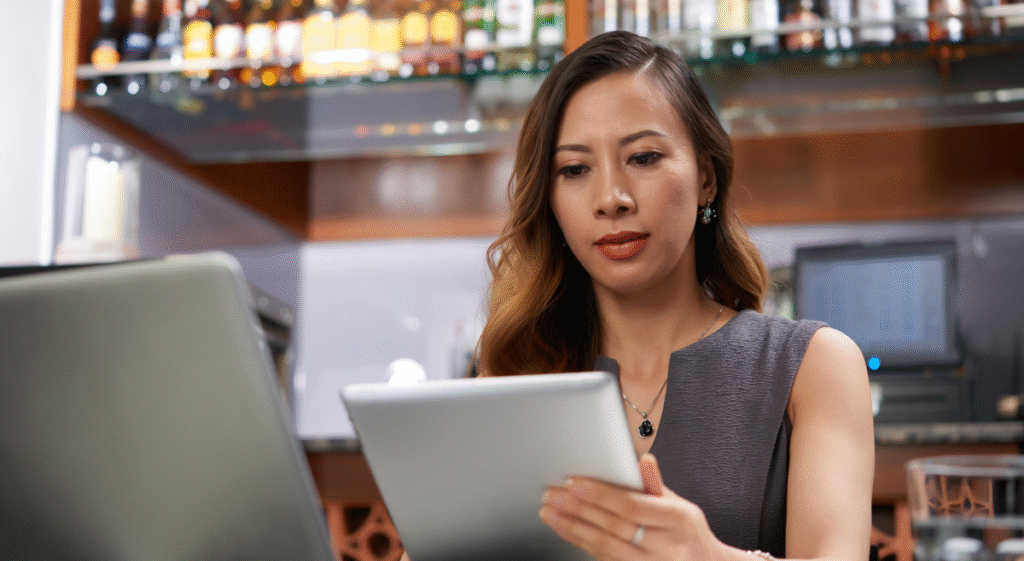
An order entered at the table should reach the kitchen and the bill without being typed twice. Every re-entry is a chance for a wrong item, a wrong price or a missing add-on.
Payments guests actually use
UPI is the default at most counters now, with cards and wallets close behind. Look for software that records each mode separately and handles split bills, because Friday groups of twelve rarely pay as one.
A kitchen that sees orders in real time
Kitchen display or ticket tracking shows what is cooking, what is delayed and what has been served. Servers stop walking back to ask, and guests stop asking where their food is.
Reports you can act on before Monday
Useful reports answer plain questions. Which dish sells after 9 pm? Which weekday is slow? What did discounts cost this week? For reconciling cash, card and UPI at closing, see our guide on restaurant end of day reconciliation.
Control when you add a second outlet
Many Tricity owners start with one café and open a second in a neighbouring city within a few years. Menus, prices and staff permissions should copy across, not be rebuilt.
Billing-Only Tools vs. a Management Platform
| What you need | Billing-only tool | Management platform (Swizzle) |
| GST-ready bills | Yes | Yes |
| Table reservations | Usually separate | Built in |
| In-table ordering | Rare | Built in |
| Kitchen tracking | Limited | Real time |
| Integrated payments | Varies | Built in |
| Loyalty and CRM | Add-on | Built in |
| Multi-location control | Varies | Ready |
If you run a tea stall or a single counter with a short menu, a lightweight billing app is enough, and paying for more would be waste. Once you take reservations, serve at tables and want to know your customers, tools start fighting each other. That is where one platform earns its price.
For a deeper look at choosing, read our best POS system for restaurant India comparison.
Why Choose Swizzle for Restaurant Billing in Tricity
Swizzle is a restaurant management platform built to streamline orders, reservations and payments in one place, so teams spend their energy on food and guests. Its modules cover:
- Smart reservations
- Real-time kitchen tracking
- Integrated payments
- Online and table ordering
- Menu management
- Analytics dashboard
- Loyalty and promotions
Four problems keep coming up in conversations with restaurant owners. Here is how Swizzle answers each.
Fewer double bookings and lost tables
Manual reservations are how double bookings happen. Swizzle’s smart reservations keep one live table plan that hosts and online guests both see. See how it works in our table reservation system for restaurants guide.
Less dependence on commission-heavy apps
Online and table ordering through your own channel means the order, and the customer record, stay with you. Loyalty and promotions then bring guests back directly.
One system instead of five
Juggling separate tools slows staff down. Reservations, ordering, kitchen tracking and payments run in a single flow, so a captain learns one screen rather than four.
A clear view of what sells and when
The analytics dashboard shows item performance and busy periods, which is what you need for menu pricing and shift planning.
What the evidence says
Swizzle’s website features a customer testimonial reporting that waiting times halved and weekend reservations rose 22%. That is one customer’s account, so ask for a demo with your own menu and request references from similar restaurants. The site also states a 99.9% uptime commitment, worth confirming in writing before you sign.
The Real Cost of Delivery App Commissions
In 2021 the National Restaurant Association of India told the Competition Commission that aggregator commissions ran between 25% and 35% of order value, and the Commission ordered a full investigation in April 2022. In July 2026, Bengaluru hotel associations were still citing commissions of 8% to 28%, plus ad and payment fees.
Run the numbers on a ₹1,000 order at 25%: ₹250 leaves before ingredients, rent or staff. Now take a restaurant with ₹10 lakh of monthly delivery orders. At 25%, that is ₹2.5 lakh in commission. Moving just 20% of that volume to your own ordering channel saves about ₹50,000 a month, before payment gateway charges. This is an illustrative calculation; your rates will differ.
The exposure is growing. NRAI and Redseer estimate online delivery’s share of foodservice rose from 4% to 11% between FY21 and FY26, and will reach about 18% by FY31. For more on the economics, see restaurant delivery app commission.
Seven Questions to Ask Before You Buy
- Does it apply 5% and 18% GST correctly, item by item and outlet by outlet?
- Can reports separate liquor, food and delivery-app orders?
- Does an order travel from table to kitchen to bill without re-entry?
- Does it reconcile cash, card and UPI separately?
- Can you see sales by hour, day and dish?
- Can a second outlet copy your menu and permissions?
- Is support reachable during dinner service, and what uptime does the vendor commit to?
Insist on a live demo using your own menu, your own tax settings and a split bill. A vendor who hesitates at that request has told you something.
A Sensible Rollout Plan
Do not switch on a Saturday. A calmer sequence works better:
- Days 1-3: load the menu, prices, GST rates and staff roles.
- Days 4-7: train the team during slow shifts and print test bills.
- Days 8-10: run the new system beside the old one for a few services.
- Day 11 onward: go live on a weekday, then review the first week’s reports.
Our guide on how to switch POS systems covers data migration in more detail.
Frequently Asked Questions
What is the best restaurant billing software in Tricity?
The best choice matches how you operate. Standalone counters may need only GST billing. Restaurants handling reservations, table ordering and multiple outlets suit a platform like Swizzle, which combines billing-ready payments with reservations, kitchen tracking, analytics and loyalty in one system.
Which GST rate should a restaurant charge?
Standalone restaurants, cafés and cloud kitchens charge 5% without input tax credit. Restaurants in specified premises, such as certain hotels, charge 18% with credit. Check your classification with a chartered accountant and the CBIC notifications, then configure rates once in your software.
Do small cafés in Mohali or Panchkula need billing software?
Yes, once volume passes what a notebook can handle reliably. Software removes manual tax calculation, records payment modes and produces sales reports. Even a small café gains from catching errors early and knowing which items drive revenue.
What is the difference between billing software and a POS?
Billing software focuses on generating bills and tax records. A POS adds order-taking, payment processing and often inventory. Restaurant management platforms go further, adding reservations, kitchen tracking, analytics and customer loyalty tools in one connected system.
How can software reduce dependence on delivery apps?
By giving guests a direct way to order and book. Own-channel ordering, table ordering and loyalty offers keep customer relationships with you, so repeat orders avoid the commissions aggregators charge on every transaction.
Can one system run outlets across Chandigarh, Mohali and Panchkula?
Yes, if the platform is multi-location ready. Swizzle lets owners manage several locations together, so menus, reports and permissions stay consistent across outlets, even when they sit in different administrations.
Conclusion: Where to Start This Week
Restaurant billing software in Tricity should be judged by how much chaos it removes, not by how many features it lists. Start with these steps:
- Audit one week of bills to estimate your error and discount leakage.
- Confirm your GST rate with your accountant, then test it in any demo.
- Total your delivery app commissions for the last month.
- Shortlist two platforms and demo both with your own menu.
If you want billing, reservations, table ordering, payments and analytics in one place, Swizzle was built for that job. Book a Swizzle demo and see your own menu running before you decide.
Sources: CBIC, National Restaurant Association of India, Franchise India (Popeyes Tricity expansion), Economic Times Hospitality via ICE (NRAI-Redseer foodservice report, July 2026), Swizzle (swizzle.co.in).